
Keep Your Natural Saltwater Aquarium Algae-free!
Keep Your Natural Saltwater Aquarium Algae-free!
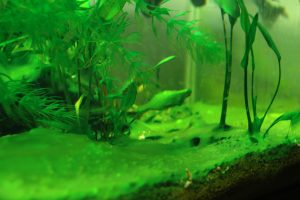
Keep Your Natural Saltwater Aquarium Algae-free!
Understanding Slime Algae: Appearance and Characteristics
Slime algae, also known as blue-green algae or smear algae, can exhibit a range of colors, such as blue-green, red, brown, or black.
A defining feature of slime algae is its slimy texture, and it tends to come off in sheets when agitated. Slime algae are fast-growing and can spread across the Natural Saltwater Aquarium (NSW) surface, often emitting an unpleasant swampy or fishy odor.
The Origins of Slime Algae: A Closer Look at Cyanobacteria
Slime algae, referred to as blue-green algae, are essentially cyanobacteria. These organisms are typically single-celled bacteria that can form visible colonies, taking on the shapes of filaments, sheets, or spheres. Cyanobacteria thrive in aquatic environments, including both freshwater and saltwater, and possess the ability to perform photosynthesis, allowing them to synthesize their own food. Unique chlorophyll types give them their blue-green hue, and they produce oxygen as a by-product of photosynthesis. This remarkable group of bacteria has a history spanning more than 3.5 billion years.
Appreciating the Contributions of Cyanobacteria
Before we become too critical of the slimy substance we need to remove, it\’s worth acknowledging the vital role cyanobacteria have played in Earth\’s history.
Firstly, these oxygen-producing cyanobacteria generated the oxygen-rich atmosphere we rely on today, during the Archaean and Proterozoic eras. Prior to their activity, the Earth\’s atmosphere had a vastly different and inhospitable composition.
Additionally, cyanobacteria are credited with contributing to the origin of plants. They established a symbiotic relationship within plant cells, enabling plants to produce their own food.
This partnership began during the late Proterozoic or early Cambrian era when cyanobacteria took up residence in certain eukaryotic cells. These eukaryotes, characterized by a nuclear membrane and chromosomes, include plants.
Considering this extensive history, it\’s evident that cyanobacteria are well-adapted survivors. For aquarium enthusiasts, this resilience means that slime algae can be challenging to eliminate.
Causes of Slime Algae Overgrowth
The overgrowth of cyanobacteria in your Natural Seawater Aquariums (NSW) typically occurs when there is an abundance of dissolved organic waste and nutrients in the natural seawater.
This can result from factors such as infrequent water changes, irregular maintenance, overfeeding, or in newly established tanks where beneficial bacterial colonies have not yet developed.
Even in well-maintained and mature tanks, cyanobacteria may appear due to their capacity to produce fixed nitrogen.
Methods to Combat Slime Algae
1. Physical Removal and Thorough Tank Cleaning:
Slime algae can be challenging to eliminate once established. Initial removal involves scraping the glass, scrubbing plants and gravel, and vacuuming the substrate. However, the algae tend to return if underlying causes are not addressed.
2. Partial Water Changes:
Regular and consistent water changes with Natural Seawater, along with ongoing maintenance, can delay or even eliminate recurrence.
3. Erythromycin Treatment:
Introducing erythromycin phosphate at a dosage of 200 milligrams per 10 gallons of Natural Seawater (NSW) can effectively target the bacteria responsible for slime algae. However, this treatment may impact beneficial bacteria and requires close monitoring of ammonia and nitrite levels for several weeks.
4. Effectiveness of Algae Eaters:
While some algae-eating fish are effective against certain types of algae, they do not address the root cause of the issue and may not solve the problem entirely.
Preventative Measures Against Slime Algae
– Regular water changes with Natural Seawater (NSW)
– Consistent maintenance of your Natural Seawater Aquarium (NSW)
– Avoiding overfeeding of fish!
– Proactive maintenance, including regular tank cleaning and water changes, remains among the best strategies to prevent slime algae. Avoiding overfeeding helps manage excessive dissolved organic waste and nutrient levels, which can fuel algae growth.
Despite best practices and regular maintenance, some algae growth may still occur.
While small amounts of algae are normal, prompt attention to sudden growth can often prevent more severe issues, especially the formation of extensive, slimy sheets.
Aquarium Saltwater Delivery - Delivering the Seawater at Your Doorstep
June 6, 2024 @ 11:50 am
[…] addition to providing high-quality aquarium saltwater, we offer tips to ensure your saltwater aquarium […]