
Reef-Safe Angelfish: Best Dwarf Angelfish for Your Reef Tank
Reef safe angelfish are mainly the swallowtail angelfish (Genicanthus), which eat plankton, and a few dwarf angelfish (Centropyge) such as the cherub, flameback and coral beauty. Most dwarf angelfish are “reef safe with caution”: they rarely touch SPS corals but may nip LPS, zoanthids and clams. Large angelfish are not reef safe.
This guide is for reef keepers who want an angelfish without losing corals. It rates popular dwarf and swallowtail angelfish by risk to each coral type, recommends the best angelfish for a reef tank at each tank size, and explains how to reduce nipping. For large angelfish and a full species overview, see our guide to saltwater angelfish types and how to choose.
Updated October 2026 by the team at Natural Seawater Supplier, a Croydon, London-based supplier of live natural seawater for marine aquariums, delivering across the UK 7 days a week.
Key takeaways
- Swallowtail angelfish (Genicanthus) such as the Bellus and Lamarck’s are the most reef-safe angelfish because they feed on zooplankton.
- Dwarf angelfish (Centropyge) are reef safe with caution: SPS corals are rarely touched, but LPS, zoanthids and clam mantles are at risk.
- The cherub, flameback and coral beauty are the lowest-risk dwarf angelfish; the lemonpeel and bicolor are the highest-risk.
- Dwarf angelfish need around 120–250 litres; swallowtail angelfish need about 500 litres.
- Well-fed angelfish added last to a mature tank are far less likely to nip corals.
Are angelfish reef safe?
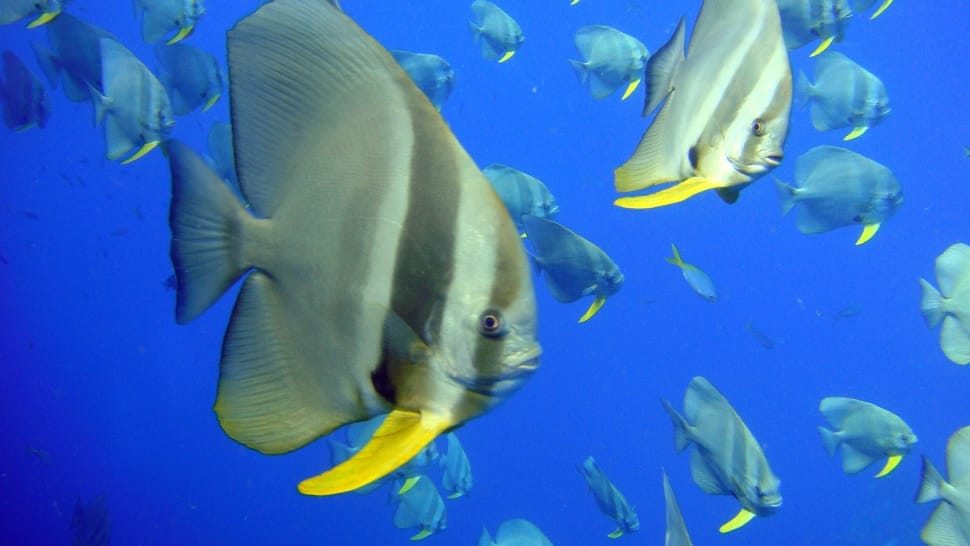
It depends on the group. In the wild, angelfish graze sponges, algae, tunicates and coral polyps. Large angelfish (Pomacanthus, Holacanthus) eat so much of that menu that they are not reef safe. Dwarf angelfish graze mainly algae and detritus but sample fleshy invertebrates out of curiosity, so each individual is different. Swallowtail angelfish feed in mid-water on plankton and are the closest thing to a fully reef-safe angelfish.
“Reef safe with caution” therefore means: likely to be fine in a reef dominated by SPS corals, a gamble with LPS, zoanthids and clams, and dependent on the individual fish and how well it is fed.
Reef-safety ratings by coral type
Risk ratings below reflect common hobby experience. SPS = small-polyp stony corals (Acropora, Montipora); LPS = large-polyp stony corals (brain corals, Euphyllia, Acanthastrea).
| Angelfish | Scientific name | Max size (cm) | SPS | LPS | Zoanthids / soft corals | Clams |
|---|---|---|---|---|---|---|
| Cherub angelfish | Centropyge argi | 8 | Low | Low–medium | Low–medium | Medium |
| Flameback angelfish | Centropyge acanthops | 7 | Low | Low–medium | Low–medium | Medium |
| Coral beauty | Centropyge bispinosa | 10 | Low | Medium | Medium | Medium |
| Flame angelfish | Centropyge loricula | 15 | Low | Medium | Medium | High |
| Potter’s angelfish | Centropyge potteri | 10 | Low | Medium | Medium | Medium |
| Lemonpeel angelfish | Centropyge flavissima | 14 | Low–medium | High | High | High |
| Bicolor angelfish | Centropyge bicolor | 15 | Low–medium | High | High | High |
| Multibar angelfish | Paracentropyge multifasciata | 12 | Low | Low | Low | Low–medium |
| Bellus angelfish | Genicanthus bellus | 18 | Very low | Very low | Very low | Low |
| Lamarck’s angelfish | Genicanthus lamarck | 23 | Very low | Very low | Very low | Low |
| Black-spot swallowtail | Genicanthus melanospilos | 18 | Very low | Very low | Very low | Low |
| Bandit angelfish | Desmoholacanthus arcuatus | 18 | Medium | High | High | High |
Best dwarf angelfish for a reef tank
Cherub angelfish (Centropyge argi)
The smallest common dwarf angel at about 8 cm, deep blue with an orange-yellow face. Suitable for tanks from about 120 litres and one of the least likely to nip corals, though it can be feisty towards small fish.
Flameback angelfish (Centropyge acanthops)
Another tiny species (about 7 cm) with a blue body and orange back. Peaceful and low risk; an excellent first angelfish for a nano-to-medium reef.
Coral beauty (Centropyge bispinosa)
Hardy, inexpensive and widely available. Most leave corals alone, but some pick at zoanthids and fleshy LPS. Needs about 200 litres.
Flame angelfish (Centropyge loricula)

The most popular dwarf angelfish: vivid red-orange with black bars. Reef safe with caution; some individuals ignore every coral, others nip clams and fleshy LPS. Captive-bred flame angels from Biota are produced in small, irregular batches (Biota flame angelfish page); see the FishBase flame angel profile for wild range.
Lemonpeel angelfish (Centropyge flavissima)

Bright yellow with blue eye rings. Beautiful but one of the most likely dwarf angels to nip LPS and clams, and assertive for its size. Best in SPS-only or fish-only systems.
Multibar angelfish (Paracentropyge multifasciata)
A shy, striped angel that is among the least likely to bother corals. It can be hard to get eating, so buy one that is already feeding in the shop.
Swallowtail angelfish: the safest choice for large reefs
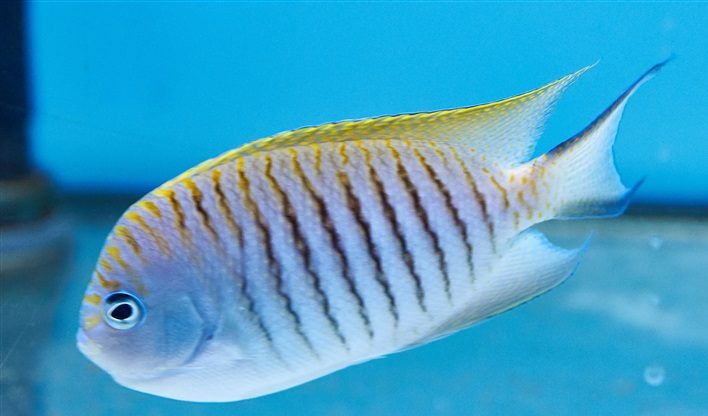
Genicanthus species such as the Bellus, Lamarck’s and black-spot swallowtail have lyre-shaped tails and hunt plankton in open water. They are peaceful, rarely touch corals and can be kept as one male with one or more females (males and females are coloured differently). They need open swimming space, about 500 litres, and several feeds a day of frozen mysis and quality pellets.
Angelfish to avoid in a reef tank
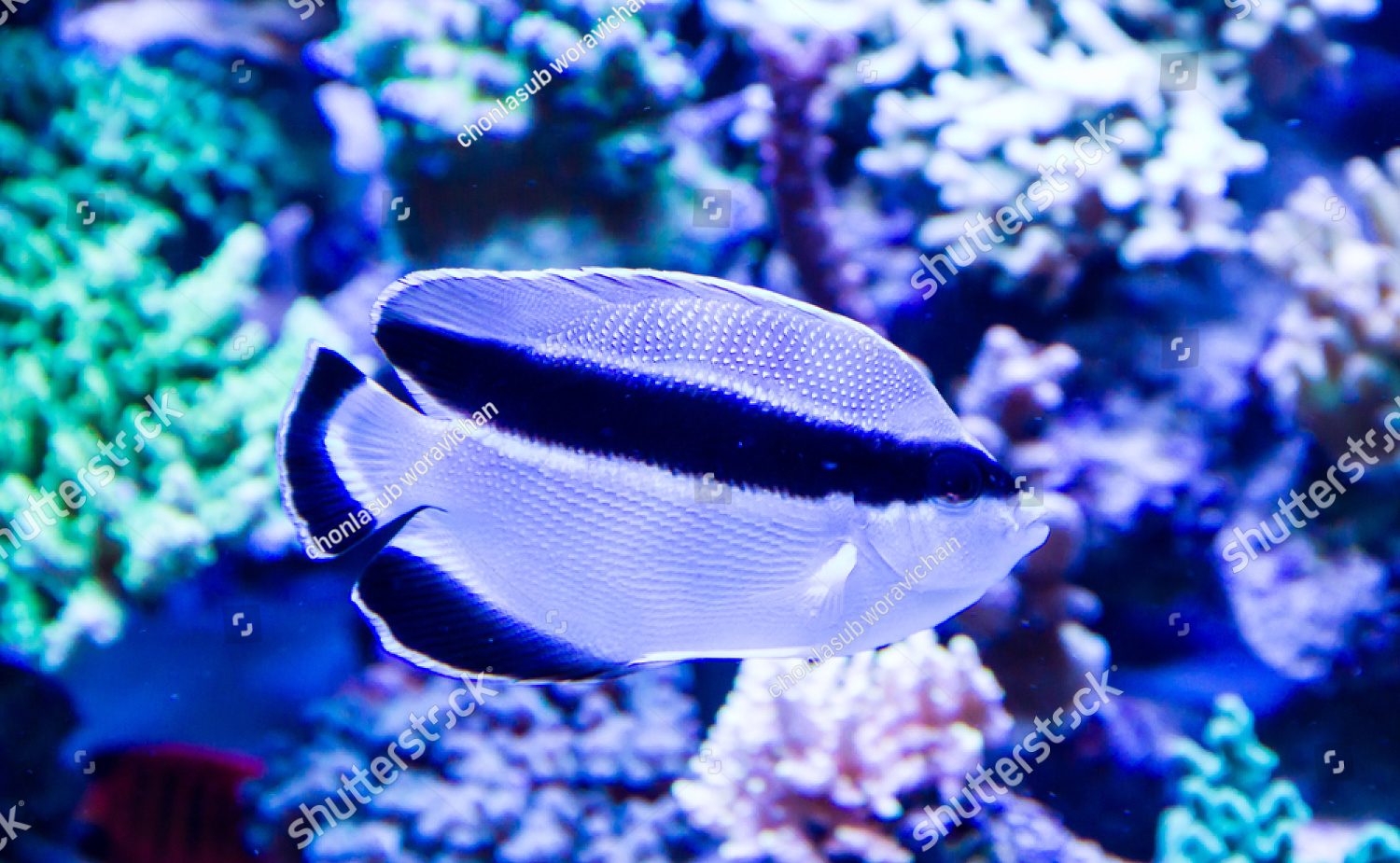
The bandit angelfish (Desmoholacanthus arcuatus) is a striking black and white Hawaiian species that feeds heavily on sponges and will sample corals. It is rare in the trade, especially since commercial aquarium collection in Hawaii was halted in December 2020. Large angelfish, including the emperor, queen, French, majestic, blue-face and rock beauty, are also best kept in fish-only systems.
Best angelfish for a reef tank by tank size
| Tank size | Best choice | Alternatives |
|---|---|---|
| 120–200 L | Cherub or flameback angelfish | None; one dwarf angel only |
| 200–350 L | Coral beauty | Flame, Potter’s (SPS-heavy tanks) |
| 350–500 L | Flame or coral beauty | Multibar; lemonpeel in SPS-only tanks |
| 500 L+ | Bellus or Lamarck’s angelfish (swallowtail) | Black-spot swallowtail; add a dwarf angel of a different colour |
How to reduce coral nipping
- Add the angelfish last, into a mature tank (six months or older) with plenty of algae and sponge growth on the rock to graze.
- Feed little and often: two or three small feeds a day, including frozen angel formula containing sponge, mysis and nori. A hungry angel is a nipping angel.
- Choose your corals: SPS-dominant reefs are lowest risk; avoid clams, zoanthids and fleshy brain corals if you are worried.
- Buy a fish already living with corals in the shop, and watch it for a few minutes before you buy.
- Keep a plan B: a trap or a fish-only tank in case a particular individual develops a taste for your corals.
Overfeeding raises nutrients, so pair frequent feeding with good export. Our guides to how much to feed marine fish and controlling nitrate and phosphate explain how to balance the two.
Water quality for reef angelfish
Dwarf angelfish do best at 24–26 °C, salinity 34–35 ppt, pH 8.0–8.3 and zero ammonia and nitrite; see ideal marine tank water parameters for the full list. Stable water keeps angels healthy and corals strong enough to shrug off the odd nip. Our natural seawater is delivered with typical calcium of 400–450 ppm, magnesium of 1250–1350 ppm and alkalinity of 7.5–8.6 dKH, ready for reef water changes; claim your free 25-litre trial to try it.
Planning a mixed community? Our guide to the best tangs for a reef tank covers which tangs live well alongside a dwarf or swallowtail angelfish.
Natural seawater for your fish
Fish and invertebrates live in natural seawater in the wild, and ours is delivered ready to use, 7 days a week. Not sure of your options? Read where to buy sea water in the UK. Get a quote for your postcode or claim 25 litres free, or call 020 7183 4175.
Frequently asked questions
Are angelfish reef safe?
Some are. Swallowtail angelfish (Genicanthus) are reef safe because they eat plankton. Dwarf angelfish (Centropyge) are reef safe with caution: most leave SPS corals alone but individuals may nip LPS corals, zoanthids and clam mantles. Large angelfish such as the emperor and queen are not reef safe.
What is the best angelfish for a reef tank?
The best angelfish for a reef tank is a swallowtail such as the Bellus or Lamarck’s angelfish if you have 500 litres or more. For smaller reef tanks, the cherub, flameback and coral beauty are the dwarf angelfish least likely to nip corals.
Is the flame angelfish reef safe?
The flame angelfish (Centropyge loricula) is reef safe with caution. Many live peacefully in SPS-dominated reefs, but some nip fleshy LPS corals, zoanthids and clams. Feeding it well three times a day and adding it to a mature tank lowers the risk.
What size tank does a dwarf angelfish need?
The smallest dwarf angelfish, the cherub and flameback, need about 120 litres. Coral beauties need about 200 litres, and flame, lemonpeel and Potter’s angelfish about 250 litres with plenty of rockwork.
How do I stop my angelfish nipping corals?
Feed a dwarf angelfish small meals two or three times a day, including frozen angel formula with sponge and nori. Add it to a mature tank with plenty of grazing on the rock, and avoid keeping its favourite targets such as clams, zoanthids and fleshy LPS corals.
Sources
External sources cited in this article (checked October 2026):
- Biota flame angelfish page (Biota)
- FishBase flame angel profile (FishBase)
Bottom line
If you want a truly reef-safe angelfish and have 500 litres or more, choose a swallowtail such as the Bellus or Lamarck’s. In smaller reefs, pick a cherub, flameback or coral beauty, add it last to a mature tank, and feed it well. Treat the flame and lemonpeel as reef safe with caution, and keep large angelfish in fish-only systems.
Best Reef-Safe Algae Eaters: Saltwater Clean-Up Crew Guide
October 19, 2026 @ 12:43 pm
[…] May nip LPS, clams and zoas; see our reef-safe dwarf angelfish guide […]