
How to Get Rid of Algae in a Saltwater Tank (and Keep It Away)
To get rid of algae in a saltwater tank, starve it rather than fight it: test nitrate and phosphate, cut what goes in (food, tap water, excess light), remove as much algae by hand as you can, boost nutrient export with water changes, a protein skimmer or a refugium, then add a clean-up crew to graze what regrows.
This is our pillar guide to algae in a saltwater tank. It explains why algae takes off, gives you a step-by-step plan that works for fish-only and reef systems, and links out to our dedicated guides for each problem type, from red slime to green hair algae.
Updated October 2026 by the team at Natural Seawater Supplier, a Croydon, London-based supplier of live natural seawater for marine aquariums, delivering across the UK 7 days a week.
Key takeaways
- Algae in a saltwater tank is a symptom of excess nutrients (nitrate and phosphate), too much light or poor flow; removing the algae without fixing the cause only buys a few weeks.
- Most mixed reef tanks stay algae-free with nitrate around 2–10 ppm and phosphate around 0.02–0.08 ppm; pushing both to zero can trigger dinoflagellates and starve corals.
- A brown diatom bloom in the first 4–8 weeks of a new tank is normal and usually clears on its own once silicate is used up and the tank matures.
- Unfiltered tap water is a common hidden source of phosphate, nitrate and silicate; use RODI top-off and clean, low-nutrient water for changes.
- A clean-up crew of snails, hermits and grazing fish helps keep algae down, but it cannot outrun a nutrient problem on its own.
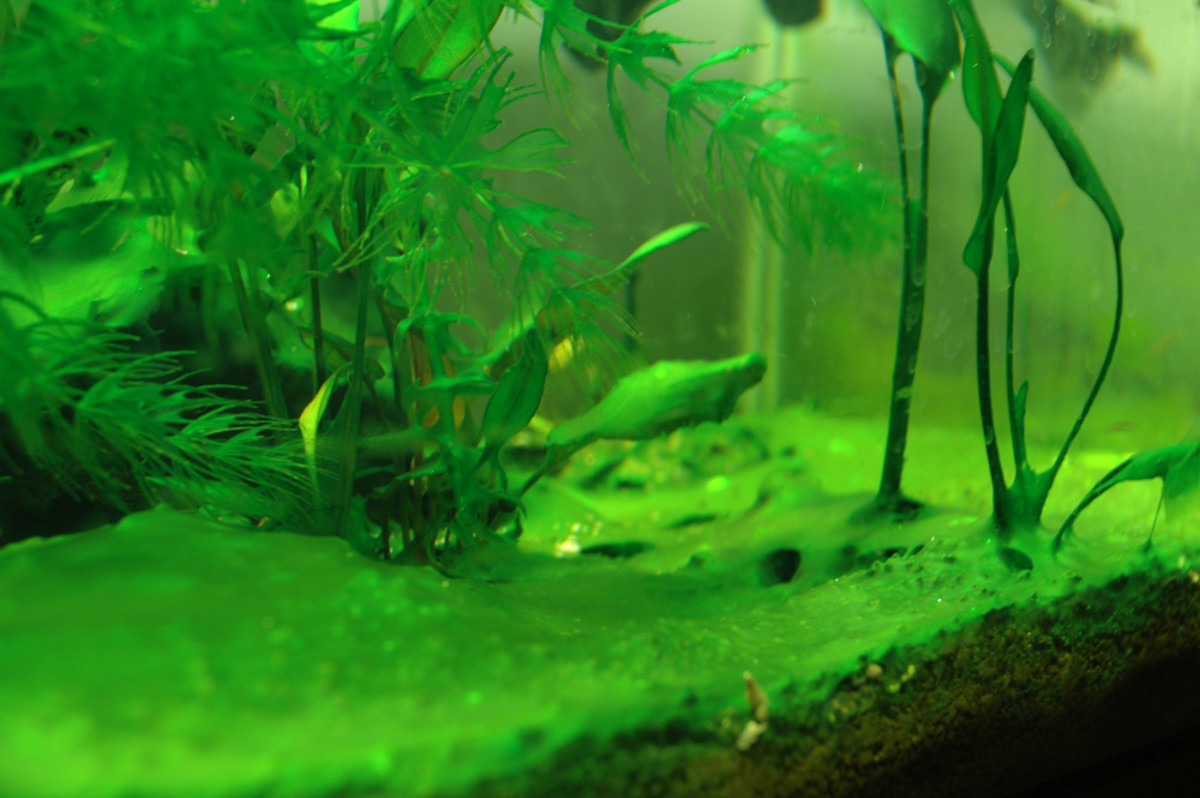
Why does my saltwater tank have so much algae?
Every marine aquarium has algae spores, so the question is never whether algae is present but what is feeding it. Algae needs light, carbon dioxide and nutrients. In a healthy tank, corals, bacteria and your filtration use up the nutrients first. When inputs outpace exports, algae wins.
1. Excess nutrients: nitrate and phosphate
Nitrate (NO3) and phosphate (PO4) are the two nutrients behind most outbreaks. They come from fish food, fish waste, decaying uneaten food, dead livestock and dirty filter media. Phosphate is the one most hobbyists underestimate: frozen food packed in phosphate-rich water, some salt mixes, buffers and old rock can all leach it. Target ranges are in the table further down.
2. Too much light, or the wrong light
A photoperiod longer than about 10 hours, ageing T5 tubes that shift colour, or lights run at full power on a fish-only tank all feed algae. Window light and sunlight on the glass are frequent culprits in UK living rooms during summer. Our reef tank lighting schedule guide shows how to set a sensible ramp-up, peak and ramp-down.
3. Low or uneven water flow
Dead spots let detritus settle and let slime algae and cyanobacteria form mats. Most reefs need a turnover of roughly 20–50 times the tank volume per hour from powerheads, aimed so that the surface ripples and the sand does not collect waste.
4. New tank syndrome (“the uglies”)
Almost every new tank goes through an algae succession in the first three months: brown diatoms, then often green film or hair algae, sometimes a little cyanobacteria. This “uglies” phase happens because bacteria and grazers have not yet caught up. Patience, light feeding and regular water changes get you through it. Diatoms that appear in week three are not a sign you have done anything wrong.
5. Tap water and silicate
UK tap water can carry nitrate of 10–40 ppm, measurable phosphate and silicate. Topping up evaporation with tap water slowly concentrates all three. Silicate in particular fuels diatoms. Always top up with RODI (reverse osmosis deionised) water, and make sure the saltwater you use for changes is low in nutrients too.
How to get rid of algae in a saltwater tank: a 7-step plan
Work through these steps in order and change one thing at a time where you can, so you know what actually worked.
- Identify the algae. Diatoms, cyanobacteria, dinoflagellates, hair algae and Bryopsis each respond to different fixes. Use our saltwater algae identification guide before you treat anything.
- Test nitrate, phosphate and (if possible) silicate. Use a low-range phosphate checker rather than a cheap strip. Note the numbers, but remember algae can hide a problem by absorbing nutrients as fast as they appear, so a zero reading during an outbreak does not mean the tank is clean.
- Reduce inputs. Feed smaller portions that are eaten within two minutes, thaw and rinse frozen food in a net, and switch top-off to RODI. See how much and how often to feed marine fish.
- Remove algae by hand. Pull hair algae, scrape the glass, and siphon slime from the sand during a water change. Removing the algae also removes the nutrients locked inside it.
- Increase nutrient export. Run a well-tuned protein skimmer, use fresh carbon and filter socks (changed every 3–4 days), consider GFO or another phosphate remover if phosphate stays above about 0.1 ppm, and grow chaeto in a refugium. Our guide to nitrate, phosphate and nutrient export covers each method.
- Do regular water changes. 10–20% every one to two weeks dilutes nitrate and phosphate and replaces trace elements. See how often and how much water to change.
- Add a clean-up crew and adjust lighting. Once the outbreak is under control, add grazers to keep it there and keep the photoperiod to around 8–10 hours. Our reef-safe algae eaters guide explains which animals eat which algae.
Algae type, cause and fix: quick reference table
| Algae type | Looks like | Main cause | Fix | Full guide |
|---|---|---|---|---|
| Diatoms | Brown dusty film on sand and glass | New tank, silicate, tap water | Wait it out, RODI top-off, snails | Types of algae |
| Cyanobacteria (red slime) | Red, purple or green slimy sheets that peel off | Low flow, nutrient imbalance, overfeeding, old bulbs | Flow, siphoning, export, treatment as last resort | Red slime algae guide |
| Dinoflagellates | Brown snotty strands with bubbles | Ultra-low nutrients, new tanks | Raise nitrate/phosphate slightly, UV, blackout | Types of algae |
| Green hair algae | Long green strands on rock | High phosphate and nitrate, long photoperiod | Manual removal, export, grazers | Green hair algae guide |
| Bryopsis | Feathery, fern-like green tufts | Nutrients, often arrives on rock or frags | Manual removal, magnesium method, fluconazole | Green hair algae guide |
| Bubble algae (Valonia) | Shiny green marbles | Imported on rock, nutrients | Remove whole, emerald crabs | Types of algae |
| Coralline algae | Pink and purple crust | Healthy calcium, alkalinity, magnesium | None needed: it is good | Types of algae |
| Chaeto (macroalgae) | Green “spaghetti” ball in refugium | Grown on purpose | Harvest to export nutrients | Nutrient export guide |
What are healthy nitrate and phosphate levels for a reef tank?
Ranges vary with what you keep, but these are sensible targets for most UK reefkeepers in 2026:
| Parameter | Fish only | Mixed reef (soft/LPS) | SPS-dominant | Algae warning sign |
|---|---|---|---|---|
| Nitrate (NO3) | Under 20–40 ppm | 2–10 ppm | 1–5 ppm | Above about 20 ppm in a reef |
| Phosphate (PO4) | Under 0.2 ppm | 0.02–0.08 ppm | 0.01–0.05 ppm | Above about 0.1 ppm |
| Silicate | Low | Under 0.5 ppm | Under 0.5 ppm | Persistent diatoms |
| Photoperiod | 6–8 hours | 8–10 hours | 8–10 hours | Over 10–12 hours |
Note the lower limits. A tank with nitrate and phosphate both stuck at zero often develops dinoflagellates or cyanobacteria, because nuisance organisms out-compete corals for scraps. Aim for low and stable, not zero.
How do I keep my saltwater aquarium algae-free long term?
A simple weekly routine
- Scrape the glass and pull any new algae before it spreads.
- Empty the skimmer cup and swap filter socks or floss.
- Test nitrate and phosphate weekly in the first year, then fortnightly once stable.
- Change 10–20% of the water every one to two weeks.
- Check the photoperiod and that no sunlight hits the tank.
- Harvest a portion of chaeto from the refugium once it fills the space.
Quarantine what goes in
Bryopsis, bubble algae and some cyanobacteria strains arrive on live rock, coral frags and even snails. Inspect frags, remove frag plugs where possible and dip new corals. Prevention is far easier than removal.
Use the clean-up crew as maintenance, not a cure
Snails like Trochus and Turbo graze film and hair algae, Cerith snails turn over the sand, and reef-safe hermit crabs pick at detritus. Herbivorous fish such as tangs and lawnmower blennies help too. All of them add to bioload, so stock gradually as the tank matures.
Do algae treatments and chemicals work?
Chemical treatments can be useful as a last resort, but they treat the symptom. Examples include cyanobacteria removers such as Boyd Chemiclean (still widely sold in 2026), magnesium-based treatments for Bryopsis, and fluconazole for persistent Bryopsis or hair algae. Each carries risks: oxygen drops, livestock stress or a rebound if nutrients stay high. Always follow the label, turn up aeration, and pair any treatment with the nutrient fixes above. In the UK, antibiotics such as erythromycin are prescription-only veterinary medicines, so they are not a DIY option.
For a well-illustrated reference to the main nuisance species, the LiveAquaria algae identification guide is a useful second opinion before you choose a treatment.
Does the water you use for changes affect algae?
Yes. A water change only lowers nutrients if the new water is cleaner than the tank water. Saltwater mixed with tap water, or a salt mix with traces of phosphate, can quietly feed the very algae you are trying to remove.
Our live natural seawater is collected, filtered and delivered with typical readings of nitrate 0–0.9 ppm, phosphate 0–0.05 ppm and silicate 0–0.1, with salinity of 34–36 ppt and stable alkalinity of 7.5–8.6 dKH. That makes it well suited to nutrient-lowering water changes. Learn more about natural seawater versus synthetic salt, or claim 25 litres free and see the difference in your own tank.
Fresh water for your algae reset
Most algae fixes start with a run of water changes. Natural seawater arrives ready to use, so there is no mixing or waiting. Compare where to buy sea water in the UK. Get a quote for your postcode or claim 25 litres free, or call 020 7183 4175.
Frequently asked questions
How do I get rid of algae in my saltwater tank fast?
Remove as much as you can by hand, siphon it out during a 20% water change, and reduce the photoperiod to about 8 hours. Then fix the cause by cutting feeding, using RODI top-off and boosting skimming. Fast fixes without nutrient control will see the algae return within weeks.
What causes algae in a saltwater tank?
Algae in a saltwater tank is caused by excess nitrate and phosphate, too much light, poor water flow, or tap water carrying nutrients and silicate. New tanks also go through a normal algae phase in the first two to three months while bacteria and grazers establish.
Is some algae normal in a reef tank?
Yes. A little film on the glass every few days and some coralline algae on the rock are signs of a living system. Algae only becomes a problem when it smothers corals, covers the sand or regrows within a day of cleaning.
Will turning off the lights kill algae?
A three-day blackout can knock back cyanobacteria and dinoflagellates, and corals usually tolerate it. It does not cure green hair algae or Bryopsis, and the algae returns if nutrients remain high, so use it alongside nutrient control.
What is the best algae eater for a saltwater tank?
There is no single best algae eater. Trochus and Turbo snails are the most reliable reef-safe grazers for film and hair algae, Cerith snails for diatoms on sand, emerald crabs for bubble algae and tangs or lawnmower blennies for larger tanks.
How often should I do water changes to control algae?
Change 10 to 20 percent of the water every one to two weeks with clean, low-nutrient saltwater. During an outbreak, a few extra changes alongside manual removal will help bring nitrate and phosphate down faster.
Bottom line
Getting rid of algae in a saltwater tank is about balance: identify what you have, test, cut the inputs, remove it by hand and strengthen export. Once nitrate and phosphate are low and stable and the lighting is sensible, a modest clean-up crew will keep the tank looking clean. If you need help with a specific problem, follow the links in the table above to our dedicated guides.
Sources
External sources cited in this article (checked October 2026):
- LiveAquaria algae identification guide (LiveAquaria)
Best Tang for a Reef Tank: Top Picks by Tank Size
October 19, 2026 @ 12:42 pm
[…] A tang helps, but it is not a cure. A yellow or kole tang will graze film and hair algae, but if nutrients stay high the algae will outgrow it. Use tangs as part of a wider plan with snails and hermits from our reef-safe clean-up crew guide, and tackle the cause with our guide on how to get rid of algae in a saltwater tank. […]
Aquarium Saltwater Delivery - Delivering the Seawater at Your Doorstep
June 6, 2024 @ 11:50 am
[…] addition to providing high-quality aquarium saltwater, we offer tips to ensure your saltwater aquarium […]