
Saltwater Aquarium for Beginners: UK Guide to Getting Started
A saltwater aquarium for beginners is very achievable if you choose the right system: a 200–300 litre fish-only or soft-coral tank, hardy captive-bred fish and a weekly testing routine. In the UK, budget from about £1,600 to set up and about £50–£120 a month to run, plus water for changes. Most early failures come from rushing, not difficulty.
This guide covers the decisions to make before you spend anything: fish-only versus reef, tank size, realistic 2026 UK costs (including electricity), the easiest fish and corals, the ten mistakes beginners make and the maintenance routine that keeps a marine tank healthy. For the hands-on build and cycling, follow our step-by-step reef tank setup guide.
Updated October 2026 by the Natural Seawater Supplier team.
Key takeaways
- A fish-only with live rock (FOWLR) tank is the most forgiving beginner saltwater tank; a soft-coral reef is a close second.
- Bigger is easier: a 200–300 litre tank holds its temperature, salinity and nutrients far more steadily than a nano under 100 litres.
- A 250 litre setup costs roughly £1,600–£3,800 as a fish-only tank and £2,250–£5,350 as a soft-coral reef in the UK (approx., as of October 2026), plus seawater for the first fill.
- At the Ofgem price cap of 26.32p per kWh (October–December 2026), a 250 litre reef using 4–7 kWh a day costs about £31–£55 a month in electricity.
- Every new marine tank needs four to eight weeks of cycling before the first fish goes in.
Is a saltwater tank hard for beginners?
A saltwater tank is not hard for beginners any more. Modern LED lights, reliable pumps, auto top-off units and accurate test kits have taken most of the guesswork out of marine fishkeeping. What it does demand is patience and routine. Saltwater fish live for years (clownfish can reach 20 years, according to typical hobby guidance), and the water must stay stable. If you can commit to 30–60 minutes a week and resist rushing, a marine aquarium is no harder than a well-run tropical freshwater tank, just more expensive.
Fish only, FOWLR, reef or coral-only: which should you choose?
| System | What it contains | Difficulty | Lighting | Best for |
|---|---|---|---|---|
| Fish only (FO) | Fish, decorative rock or ornaments, mechanical/biological filter | Easy–moderate | Basic marine LED | Larger or messier fish; tight budgets |
| Fish only with live rock (FOWLR) | Fish plus live rock as the biological filter, no corals | Easiest | Basic marine LED | Most beginners |
| Soft-coral reef | Fish, invertebrates and soft corals | Moderate | Reef LED | Beginners who want corals |
| Mixed reef (LPS/SPS) | Fish, inverts, stony corals | Harder | Strong reef LED, PAR-tuned | Year two onwards |
| Coral-only reef | Corals and clean-up crew, few or no fish | Moderate–hard | Reef LED | Coral enthusiasts; very low nutrients needed |
What is a fish only marine tank?
A fish only marine tank keeps no corals, so you can relax on lighting, keep nitrate higher (under about 40 ppm is fine for most fish) and stock fish that would eat or nip corals, such as larger angelfish, triggers and puffers. A FOWLR tank adds live rock, which acts as a natural biological filter and gives fish more grazing and hiding space. It is the cheapest and most forgiving way into the hobby.
Can you have a fish only reef tank or a coral only reef tank?
“Fish only reef tank” usually means a FOWLR tank with reef-style rockwork but no corals; you can add corals later if you upgrade the lighting. A coral-only reef has corals and a clean-up crew but few fish. It sounds simpler but is trickier: with so little fish waste, nutrients can fall too low and corals pale, so you will often need to feed the tank deliberately.
What size saltwater tank should a beginner start with?
| Tank volume | Pros | Cons | Verdict |
|---|---|---|---|
| Nano (under 100 L) | Cheap to set up, small water changes | Parameters swing fast; very limited fish choice | Only if you can check it daily |
| 100–200 L | Manageable size, reasonable fish choice | Still sensitive to overfeeding and missed top-off | Good second choice |
| 200–300 L | Stable, wide fish choice, room for a sump | Higher set-up cost, heavy (350 kg+) | Best beginner size |
| 400 L+ | Very stable, room for tangs | Expensive to light and run, big water changes | Great if budget allows |
Nano tanks are tempting but unforgiving. In 60 litres, one missed top-off day can raise salinity noticeably and one heavy feed can spike ammonia. If space allows, start at 200–300 litres.
How much does a saltwater aquarium cost in the UK in 2026?
Set-up costs (250 litre tank)
| Item | Fish only / FOWLR | Soft-coral reef |
|---|---|---|
| Tank, cabinet and sump | £600–£1,500 | £600–£1,500 |
| Lighting | £80–£200 | £350–£800 |
| Return pump and wavemakers | £200–£450 | £250–£650 |
| Protein skimmer | £200–£450 | £200–£450 |
| Heaters, auto top-off, refractometer | £150–£350 | £150–£350 |
| Test kits | £40–£80 | £100–£200 |
| Rock and sand | £200–£400 | £200–£400 |
| Seawater for the first fill (about 225 L, or 9 × 25 L) | Quote by postcode | Quote by postcode |
| First livestock | £150–£400 | £400–£1,000 |
| Total | About £1,600–£3,800 plus seawater | About £2,250–£5,350 plus seawater |
Prices are approximate UK retail as of October 2026. Delivered natural seawater is priced per order, so get a quote for your postcode; reusable food-grade 25 litre containers are available if you need them.
Monthly running costs
| Cost | Per month (250 L reef) |
|---|---|
| Electricity | £31–£55 (FOWLR: about £20–£35) |
| Water changes (10% weekly, about 100 L a month) | Natural seawater: quote by postcode (or mix your own salt) |
| Food | £8–£15 |
| Test reagents | £8–£15 |
| RO/DI water for top-off | £5–£15 |
| Coral supplements | £0–£20 |
| Total | About £52–£120 plus water-change water |
How much electricity does a marine tank use?
Under the Ofgem price cap for 1 October to 31 December 2026, electricity averages 26.32p per kWh for Direct Debit customers on a standard variable tariff. The cap changes every quarter, so check your own unit rate.
| Device | Typical watts (approx.) | Hours a day | kWh a day |
|---|---|---|---|
| Reef LED light | 90–150 W | 10 | 0.9–1.5 |
| Return pump | 30–50 W | 24 | 0.7–1.2 |
| Two wavemakers | 30–50 W total | 24 | 0.7–1.2 |
| Protein skimmer | 15–25 W | 24 | 0.4–0.6 |
| Heaters (average duty) | 50–100 W | 24 | 1.2–2.4 |
| Total | 3.9–6.9 kWh (about £31–£55 a month) |
Heating is the variable: a tank in a cold room in a British winter costs noticeably more than one in a warm living room. Insulating the back and sides of the cabinet and keeping a lid or cover on helps.
What are the best saltwater fish for beginners?
| Fish | Adult size | Temperament | Notes |
|---|---|---|---|
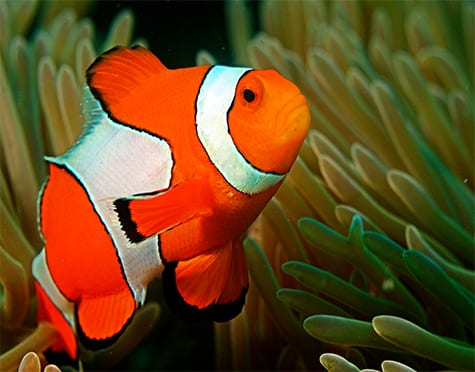
| Ocellaris clownfish (captive-bred) | 8–10 cm | Peaceful | Hardy, reef safe, does not need an anemone |
| Royal gramma | 8 cm | Peaceful | Bright, hardy, keep one per tank |
| Firefish goby | 7 cm | Peaceful | Jumps: use a lid or mesh cover |
| Yellow watchman goby | 10 cm | Peaceful | Can pair with a pistol shrimp |
| Tailspot blenny | 7 cm | Peaceful | Grazes film algae, lots of character |
| Banggai cardinalfish (captive-bred) | 8 cm | Peaceful | Slow-moving, easy to feed |
Leave tangs, angelfish, mandarins and anything wild-caught and fussy until the tank is at least six months old. Feed small amounts once or twice a day; our guide on how often to feed saltwater fish gives portion sizes.
What are the best corals for beginners?
| Coral | Type | Light | Notes |
|---|---|---|---|
| Mushrooms (Discosoma, Rhodactis) | Soft | Low–moderate | Almost indestructible |
| Zoanthids | Soft | Low–moderate | Colourful; wear gloves, some contain palytoxin |
| Green star polyps | Soft | Moderate | Spreads fast; keep on an isolated rock |
| Leather corals (Sarcophyton, Sinularia) | Soft | Moderate | Tolerant; may release chemicals, run carbon |
| Duncan coral | LPS | Low–moderate | Easiest LPS; feed occasionally |
| Hammer and frogspawn | LPS | Moderate | Give space; long sweeper tentacles |
Pair corals with a clean-up crew of snails and small hermit crabs; our guide to reef-safe algae eaters shows how many to add. Lighting matters too: see our reef tank lighting schedule.
10 beginner saltwater tank mistakes to avoid
- Adding fish before the tank has cycled. Wait until ammonia and nitrite read zero within 24 hours of dosing.
- Starting with a nano because it seems easier. Smaller water volumes swing faster.
- Adding several fish at once. Add one or two every two to three weeks.
- Overfeeding. Uneaten food becomes nitrate, phosphate and algae.
- Topping up with saltwater. Only fresh water evaporates; top up with RO/DI water.
- Using tap water. UK tap water can carry nitrate, phosphate, silicate and copper.
- Dosing without testing. Never add supplements you have not tested for.
- Ignoring compatibility. Damselfish bully; tangs need far more space than they look.
- Trusting a cheap hydrometer. Use a refractometer calibrated with 35 ppt fluid.
- Running lights 12+ hours. Eight to ten hours is plenty and keeps algae in check.
What maintenance does a saltwater aquarium need?
| How often | Tasks |
|---|---|
| Daily | Check temperature, feed, count fish, check the top-off reservoir, listen for pump noises |
| Every 3–4 days | Change or rinse filter socks |
| Weekly | 10% water change; test salinity, nitrate, phosphate and alkalinity; clean the glass; empty the skimmer cup |
| Monthly | Test calcium and magnesium; replace carbon; check heater calibration |
| Every 3–6 months | Clean pumps and wavemakers; replace RO/DI cartridges as needed |
Weekly water changes are the backbone of the routine; our guide to how much and how often to change water in a saltwater aquarium explains why 10% a week works, and the marine tank water parameters guide lists the target numbers.
Should beginners use natural seawater?
Natural seawater removes the most error-prone beginner job: mixing salt. It arrives at 34–36 ppt salinity with calcium, alkalinity and magnesium already in reef range, so water changes become pour-and-go. Natural Seawater Supplier, based in Croydon, London, delivers live natural seawater for marine aquariums across the UK, 7 days a week, and supplies UK fish stores. Our comparison of natural seawater vs synthetic salt covers the trade-offs honestly. New customers can claim 25 litres of natural seawater free to try it before the first fill.
Choosing your first fish? Read our tang fish guide before buying a tang, compare species in saltwater angelfish: types and tank sizes, and if you want something unusual, start with our seahorse aquarium guide.
Filling a new tank?
Work out your volume with our saltwater fill calculator. We can deliver the first fill and pump it straight into your aquarium. Get a quote for your postcode or claim 25 litres free, or call 020 7183 4175.
Frequently asked questions
Is a saltwater tank hard for beginners?
No, a saltwater tank is manageable for beginners who are patient. Modern equipment makes it far easier than it used to be. The keys are a large enough tank, a full cycle before adding fish, slow stocking and weekly testing and water changes.
What is the best saltwater tank size for a beginner?
A 200 to 300 litre tank is the best size for most beginners. The larger water volume keeps temperature, salinity and nutrients stable, so small mistakes do less harm. Nano tanks under 100 litres need daily attention.
How much does it cost to run a marine tank in the UK?
A 250 litre reef tank costs about £52 to £120 a month to run in the UK, plus the water for changes. Electricity is about £31 to £55 of that at Ofgem’s October 2026 price cap rate of 26.32p per kWh, with the rest on food, test kits, supplements and top-off water. Water-change costs depend on whether you mix salt or have natural seawater delivered.
What is a fish only marine tank?
A fish only marine tank keeps fish but no corals. A fish only with live rock (FOWLR) tank adds live rock as a natural biological filter. Both are cheaper and more forgiving than a reef tank because they need less light and tolerate higher nitrate.
Can you have a coral only reef tank?
Yes. A coral only reef tank keeps corals and a clean-up crew with few or no fish. Because there is little fish waste, nutrients can drop too low, so you usually need to feed corals directly and test nitrate and phosphate regularly.
What are the easiest saltwater fish for beginners?
Captive-bred ocellaris clownfish, royal grammas, firefish, yellow watchman gobies, tailspot blennies and Banggai cardinalfish are among the easiest. They are hardy, peaceful and reef safe. Add one or two at a time after the tank has cycled.
Bottom line
The best saltwater aquarium for beginners is a 200–300 litre FOWLR or soft-coral tank, stocked slowly with hardy captive-bred fish and kept on a simple weekly routine. Budget realistically for both set-up and running costs, cycle properly and you will avoid the mistakes that end most first tanks. When you are ready to fill, get a quote for natural seawater delivery.
Reef Tank Lighting Schedule: Hours, PAR & Marine Lights
October 19, 2026 @ 12:38 pm
[…] and white channels is fine; the money saved on lighting is better spent on a larger tank. See our saltwater aquarium for beginners guide for choosing between fish-only and reef […]